

Dacia Spring Review (2025)
Read Caroline's Dacia Spring review for everything you need to know about Dacia's new electric city car.
The Dacia Spring first came to market in Europe in 2021, with over 150,000 registered since then. This year it's available in Ireland for the very first time, coinciding with Dacia now manufacturing it in right hand drive.
The Spring was Dacia's first ever electric vehicle and joins the range alongside the bestselling Sandero, Duster, Jogger and soon to arrive Bigster.
Its arrival has been eagerly anticipated thanks to a promising sticker price from just €16,990, making it the most affordable electric car on sale...indeed any car. The Spring is all about simplicity and affordability so is it a good option if you're looking for a small electric car?
Let's take a closer look.

Design
The Spring has a cheeky, robust look to it, emphasised by high ground clearance and lashings of protective cladding. It gets the new face of the Dacia brand with Y-shaped lighting at the front and rear, and LED daytime running lights come as standard.
There are two versions for Ireland, the Expression and the Extreme, the latter which is the most bling of the range with copper coloured wing mirror caps, black finished 15-inch steel wheels and 'urban-inspired' front and rear bumpers with mesmerising decals.
At just 3.7 metres, it is a perfect size for parking in tight spaces or traversing narrow city streets and country lanes.
There are six colours to choose from: Brick Red, Safari Beige, Lightning Grey, Khaki Green, Stonewash Blue and Polar White. The Expression 45hp comes with 14-inch steel wheels and 15-inch steel wheels on the 65hp version.
Dacia Spring Interior
For a budget car, the Spring does a good job of feeling well-equipped, particularly if you're willing to fork out a little bit extra to get the Extreme model that comes with a parking camera and 10-inch touchscreen with navigation and wireless Apple CarPlay/Android Auto. The Extreme also has more copper detail inside, as well as sturdy, rubber floor mats, and door sills with unique ‘topographic lines’ design.

Even the entry Expression model gets a 7-inch digital driver display that's customisable but there's no touchscreen. However, you can connect your phone to the free Dacia Media Control app and control media and calls that way. Other standard features include cruise control, steering wheel mounted controls, central locking with remote control, electric front windows, rear parking sensors, 12V socket, USB port and manual air conditioning.
There's also a short stubby gear selector and a manual handbrake. Starting the 'ignition' with a key is quite a quaint feature these days!
There are plenty of hard plastics about the cabin but they don't feel out of place. Harder to ignore is the flimsy feeling to the closing of the doors and boot. The cabin space is rather tight up front and there's no height adjustment for the driver's seat. The steering wheel can only be adjusted for height, not reach.
Driver assistance features used to be sparse on Dacias but even the Spring now comes with emergency braking, traffic sign recognition with speed alert, rear park assist, emergency stop signal, lane change alert, lane keep assist, driver attention warning, and emergency call.
Practicality
The Spring has a 308-litre boot, which is not bad for a city car and larger than what you will find in the back of a Fiat 500e. You can also let down the rear seat in one complete piece. There's also the option to have a storage tray fitted under the bonnet.
Space in the back is very tight, with not much legroom at all, even behind an average-sized adult.

What is the range of the Dacia Spring?
The Spring comes with a 26.8kWh lithium-ion battery and is available with either 45hp or 65hp motor driving the front wheels. The range is officially up to 225 kilometres (WLTP). When the battery was fully charged 'in real life', it displayed about 190 kilometres.
It's very efficient however, owing to its lightweight design. My average consumption over a week of driving was just 10.2 kWh per 100 kilometres.
Driving the Dacia Spring
The Spring is light by design, weighing less than one tonne, and is available with 45hp or 65hp. I tested the 65hp version and while it can feel slow when joining a motorway, otherwise it's sprightly enough around town and responsive to drive. You can select the B mode from the tiny gear selector between the two front seats and that will increase the strength of regenerative braking.
The wheels are tiny, the steering is light, a combination that would put you off cornering at any great speed. But driven at a more sedate pace and it's not such an issue.
However as you pick up speed, for example out of town or even if you're brave enough for a motorway stint, things start to unravel quickly. The ride quality is choppy and harsh, even going over ramps in town. It also gets uncomfortably loud in the cabin at high speeds.

Charging
The Spring is designed for the city but should you find yourself taking a longer trip out of town, the Spring can support CCS charging at a modest 30kW. Though that's only if you opt for the more expensive Extreme trim. It's going to take about 45 minutes to get from 20-80%, so be prepared to wait.
Home charging is likely to be the most popular option for the Spring. With a 7kW wallbox installed, it's possible to charge the Spring to full in just under 5 hours or in 13.5 hours from a three point socket.
Extreme comes with access to the Dacia app to schedule charging or activate cabin pre-heating/air con remotely. Vehicle to load charging is also possible whereby you can power other devices from the charge socket with a special adaptor.
How much is the Dacia Spring in Ireland?
The Spring is available from €16,990 with the 45hp motor in Expression trim. Opt for the same version with the 65hp motor, and the price is €18,790. The Extreme 65hp is available from €19,990.

Verdict
The Dacia Spring's arrival has been eagerly anticipated as demand has increased for electric cars without prohibitive sticker prices. Now it's here, perhaps a little bit on the late side. It no longer has this market to itself because of the likes of the new Hyundai Inster and Citroen E-C3.
For Dacia in Ireland, it's a big milestone as its first electric car to market. Its biggest competition may come internally from the Sandero supermini, which has become a real hit on the Irish market and is priced in the region of the Spring 65hp.
The Spring has lots of character and attitude, but it's not without compromises when it comes to the range, charging, passenger space, but also the comfort it can offer driver and passengers.
Undoubtedly a milestone car that's not the panacea of small electric cars but likable in its own way.
_______________
Written by Caroline Kidd
Founder and Editor of Changing Lanes, Juror for Irish Car of the Year


Peugeot 208 Hybrid Review
Read Caroline's Peugeot 208 Hybrid review for everything you need to know about buying Peugeot's small hatchback in Ireland.
Peugeot has updated its smallest hatchback and added a new hybrid to the 208 range in keeping with current market trends for small hybrid cars.
First launched back in 2020, the current 208 still ticks the desirability box for a stylish small hatchback and offers a good range of power options, from full electric to simple petrol and now a new hybrid.
Paired with an automatic transmission, the new 208 hybrid retails from €30,495. It's a considerable spend on a small car but is the 208 still just a cut above the rest?
Let's take a closer look!

Design
The 208 is a good-looking small car and though the current one has been on Irish roads since 2020, it still looks fresh and modern. The facelift brings the 208 in line with other models in the range like the 2008 and 3008. The fang-like daytime running lights have been replaced by a new 'tri-claw' design and the 208 also wears the brand's new lion shield logo for the very first time.
At the back, the rear lights have a slightly different light signature but otherwise it's business as usual. Peugeot has also introduced a brand new colour called Agueda Yellow and the 208 pulls it off perfectly. It's also the standard colour available at no extra cost.
Like before there are a few trim lines on offer: Active, Allure and GT. Allure really is the sweet spot of the range with 16-inch diamond cut alloy wheels and a body-coloured finish to the detail of the front grille. LED headlamps are standard across the range. All versions get contrasting black wing mirror caps.

Peugeot 208 Interior
Inside the 208 feels posh and premium for a small car. The i-Cockpit design is still incredibly stylish with a wraparound, driver-focused feel. All versions now get the 10-inch touchscreen with wireless Apple CarPlay/Android Auto connectivity, which is very convenient. There's also a new digital instrument panel with updated graphics on the Allure model and a number of different views possible.
Other features include automatic climate control and a reversing camera. GT models add wireless smartphone charging, otherwise charging is via a USB port. No model in the range comes as standard with heated seats but these are available as part of a pack that also adds fancier seats.
The 208 has quite dinky dimensions but I was able to sit comfortably in the back behind the driver's seat set for me. Taller adults may find it a little tighter but children will be fine and there's Isofix child seat fixtures on the two outer seats. There's a decent 352 litre boot in the hybrid and petrol models. Opt for the E-208 and that shrinks to 309 litres. The rear seats can also split fold 60:40.

Driving the 208
On the road the Peugeot 208 feels fun and lively to drive. It has a well-sussed suspension and is one of the most comfortable and refined small cars on sale. On the motorway it never gets too noisy and is still very comfortable by small car standards. There's a real feeling of quality to this car that puts it near the top of the segment with the likes of a Volkswagen Polo.
There's also a great choice of powertrains. The range kicks off with a simple 1.2 petrol with 75hp and a five speed manual gearbox. The same engine is available with 100hp and a six speed manual.
The E-208 is a great small electric car and now has a new 54kWh battery that puts the range in the region of 400 kilometres.
If you're looking for a petrol automatic, there's now the new 1.2-litre hybrid with 100hp. It comes with an electrified 6-speed automatic, which includes an electric motor and a small lithium ion battery that can recharge while driving and offers extra torque at low revs and lower fuel consumption overall than the standard petrol.

It feels very punchy and responsive at speed, however in stop/start traffic the transitions between the engine and electric motor powering the car can make it difficult to drive smoothly. There are a few driving modes like normal, sport and eco to adjust the drive somewhat. There are also paddles behind the steering wheel.
For such a lively engine, it is efficient however. It has lower carbon emissions and can run on electric power alone for up to 50% of the time in town and city driving. Over a week of driving, my average fuel consumption was 5.2 litres per 100 kilometres.
Driving aids include cruise control and traffic sign recognition, while the Allure adds handy blind spot monitoring for safer motorway driving.
Peugeot 208 Pricing
The 208 range kicks off from €26,195 for the 1.2 petrol 75hp in Active trim. The 100hp version comes in the Allure trim with more equipment and retails from €28,995. The new 208 Hybrid is available from €30,495 and the E-208 from €31,790.

Verdict
The Peugeot 208 is still a star buy in the small car world and manages to be fun but with the comfort and quality of a larger car. There's now a greater choice than ever when it comes to powertrains. The hybrid can post some very good efficiency figures but the petrol manual keeps the price more reasonable so it really depends on how much you want to spend. It's a very desirable small car and still among the best out there.
_______________
Written by Caroline Kidd
Founder and Editor of Changing Lanes, Juror for Irish Car of the Year

Suzuki Swift Hybrid Review
Read Caroline's Suzuki Swift Hybrid review for everything you need to know about buying Suzuki's popular small car.
Earlier in 2024, I was in Bordeaux with Suzuki to drive the new Swift. Now I've had more time to spend with the Swift on Irish roads and really put its efficiency to the test. Priced from just €21,995, it's easily one of the best value small cars on sale.
While it doesn't look radically different from the model it replaces, it does have a new mild hybrid engine. Hybrid is something that Suzuki has been championing in its range of cars over the last few years. Every model now has some sort of hybrid assistance, including the ever popular Vitara and the Swace Hybrid.

The Swift still uses a 1.2-litre engine with mild hybrid assistance however it's gone from being a four cylinder to a three cylinder unit. Power is similar to before at 82hp. There is a little bit of extra torque but really the Swift is not a fast car. Around town it feels nippy but it feels slow when getting up to motorway speeds.
Yet there is appeal to its simplicity. Paired with a five-speed manual gearbox, the Swift is a joy to drive. There is the option of a CVT, but unless you really need an automatic, the manual is the one to go for. The Swift is not a heavy car, still weighting less than a tonne. It corners with gusto and the steering is weighted nicely, not feeling too light or heavy.
It's comfortable by small car standards and well suited to all sorts of Irish roads. It doesn't feel quite as home on the motorway, where something like a Peugeot 208 is a more quiet and refined vehicle. But for its price point, it's absolutely fine.
Where the Swift really shines, is for efficiency. Over a week of driving my average consumption was 4.5 litres per 100 kilometres, which is just as good as rivals like a Toyota Yaris Hybrid, Renault Clio Hybrid and MG3 Hybrid.

It comes in at a great price too, with the entry level Motion retailing from €21,995. That's excellent value these days for a small car. It has loads of equipment including a new touchscreen with wireless Apple CarPlay and Android Auto, reversing camera, heated front seats and advanced driver assistance features like adaptive cruise control, blind spot monitoring and traffic sign recognition. The Ultra model retails from €23,195.
The standard wheel size is 16-inch across the range. Like before, you can opt for a contrast roof. There's a great selection of colours including new Cool Yellow. But the Swift really looks good in Frontier Blue, a metallic option for just €475.
The boot is on the small side at 265 litres but will still swallow two small suitcases and a few bags. You can also let down the rear seat and it split folds 60:40 as standard. Legroom is generous in the back though there are few creature comforts. There's Isofix on the two outer seats.
Suzuki has massively improved the cabin design and quality. There are still hard plastics but it comes in an attractive two-tone colour scheme with different materials and textures to add a bit of variety. It's built in Japan and feels very well put together.

The brand's first fully electric model will launch in 2025, the e Vitara, but the Swift proves that even a small petrol car can be very efficient to run. The Swift has also just been awarded Irish Compact Car of the Year 2025, so it's the critic's choice too of all the new small cars released in the last 12 months.
For more on the new Swift, watch my video review:
_____________________
Written by Caroline Kidd
Founder and Editor of Changing Lanes, Juror for Irish Car of the Year

Opel Corsa Hybrid Review (2024)
Read Caroline's Opel Corsa Hybrid review for everything you need to know about buying Opel's small hatchback in Ireland.
When the current generation of the Opel Corsa launched in Ireland in 2020, it was a big step up from the model it replaced. Sharing engines and underpinnings with the Peugeot 208, it was launched at the start of a renaissance for the German car brand and was followed by new generations of the popular Mokka and Astra.
Opel's resurgence continues this month with the arrival of the new Grandland, which will be followed in the new year by the Frontera, now a small SUV that will be offered as both mild hybrid and fully electric.
The Corsa is Opel's bestseller in Ireland at the moment, so it's still a very important car for the brand. Four years on from its launch, it's time for a refresh and the introduction of the new Corsa Hybrid.
Let's take a closer look.

Design
Smart and compact, the Corsa is quite an adorable little thing. Especially finished in a bright colour like Hot Red. The Corsa has had a significant facelift for 2024 that brings it in line with other models in the Opel range like the Mokka, Astra and Grandland. It now features the brand's 'Vizor' face - the black panel stretching between the lights with the Opel blitz logo in the centre. It gives the Corsa a stronger presence than before.
It's business as usual elsewhere. The GS bestows a little more personality on the Corsa. This top of the range model gets a black contrast roof, gloss black trim in the front bumper, 17-inch black alloy wheels and blacked out Opel blitz logo.
The standard wheel size on the entry level SC and Elegance model is 16-inch. LED headlights come as standard.
Opel Corsa Interior
The Corsa's interior is simple and functional. Every Corsa now has a 10-inch touchscreen as standard with wireless Apple CarPlay and Android Auto. The GS model also gets a 7-inch digital driver display. The infotainment system is easy to use, while Opel has held on to traditional dials and buttons for the heating and ventilation.

There's a small switch on the centre console to flip between forward and reverse in the new Corsa Hybrid and a button for the electronic parking brake release.
All versions come with fabric seats, though the GS gets a sportier style. Manual air conditioning and cruise control are standard across the range. The GS model adds niceties like heated front seats and a rear view camera.
The Corsa is on the smaller side of the supermini class. In the back you will fit adults from time to time, but legroom will be tight. The boot is also on the small side at 309 litres - but a bit bigger than full hybrid rivals and just enough space for a small suitcase and a few bags.
Driving the Corsa Hybrid
The big news is that the Corsa is now available for the first time as a hybrid with 48-volt technology. It uses a lithium-ion battery that can charge automatically and turbocharged 1.2-litre three-cylinder petrol engine.
It also offers more power than the standard petrol Corsa (100hp vs 75hp) and feels livelier and more robust on the road, going seamlessly from town to motorway driving. The engine is coupled to a new electrified six-speed dual clutch automatic transmission and a 28hp electric motor.

In town and city driving at low speeds, it's possible to drive up to 50% of the time purely electrically. So in stop/start driving in traffic for instance, the Corsa can power itself from its electric motor without calling on the engine.
The system is not completely silent and whirrs and purrs, but it's a clever system all the same. During deceleration, the petrol engine stops and the e‑motor acts as a generator to recharge the hybrid system's 48V battery.
In mixed driving, including motorway runs, my average consumption was 5.0 litres per 100 kilometres, so it can certainly take on hybrid rivals like the Toyota Yaris Hybrid, MG3 and Renault Clio Hybrid for efficiency, particularly in town driving. Motor tax is €190 per year.
Otherwise, the Corsa is a lively and athletic drive. The steering has enough weight in it to feel solid on the motorway and through bends. There are also Eco, Normal and Sport driving modes to choose from.
It feels less comfortable out on the motorway and there's no getting away from the road and wind noise, but it does well in town and on rural roads.

Opel Corsa Pricing
The Corsa Hybrid is available in Ireland from €29,695 in SC trim, from €30,795 for the Elegance and from €31,695 for the GS. For reference, the petrol manual range starts from €25,095.
Verdict
The new Opel Corsa Hybrid gives the Corsa a little more pep in its step when it comes to power, the handiness of an automatic particularly in stop/start town and city driving, while also being an efficient choice. It does come at a premium however over the standard petrol Corsa for what is still a small car.
On the road, it's nifty to drive and clever too with its ability to run from its electric motor in small stints. In this way it's well suited to town driving. That's where its dinky dimensions do shine. So if you're looking for a small hybrid car, it's definitely worth a look.
_____________________
Written by Caroline Kidd
Founder and Editor of Changing Lanes, Juror for Irish Car of the Year

Fiat 600e Review | Charming compact crossover
Read Caroline's Fiat 600 review for everything you need to know about buying Fiat's new compact crossover in Ireland.
If you love the cute style of the Fiat 500, but it's just not big or practical enough for you, then you might want to take a look at the new Fiat 600.
Available as a mild hybrid or full electric 600e, Fiat's new compact crossover offers something different for buyers seeking a fun and colourful companion for the road.
Priced from €28,995 for the hybrid and from €32,995 for the electric, it offers style and affordability in the trendy shape of a crossover.
Let's take a closer look.

Design
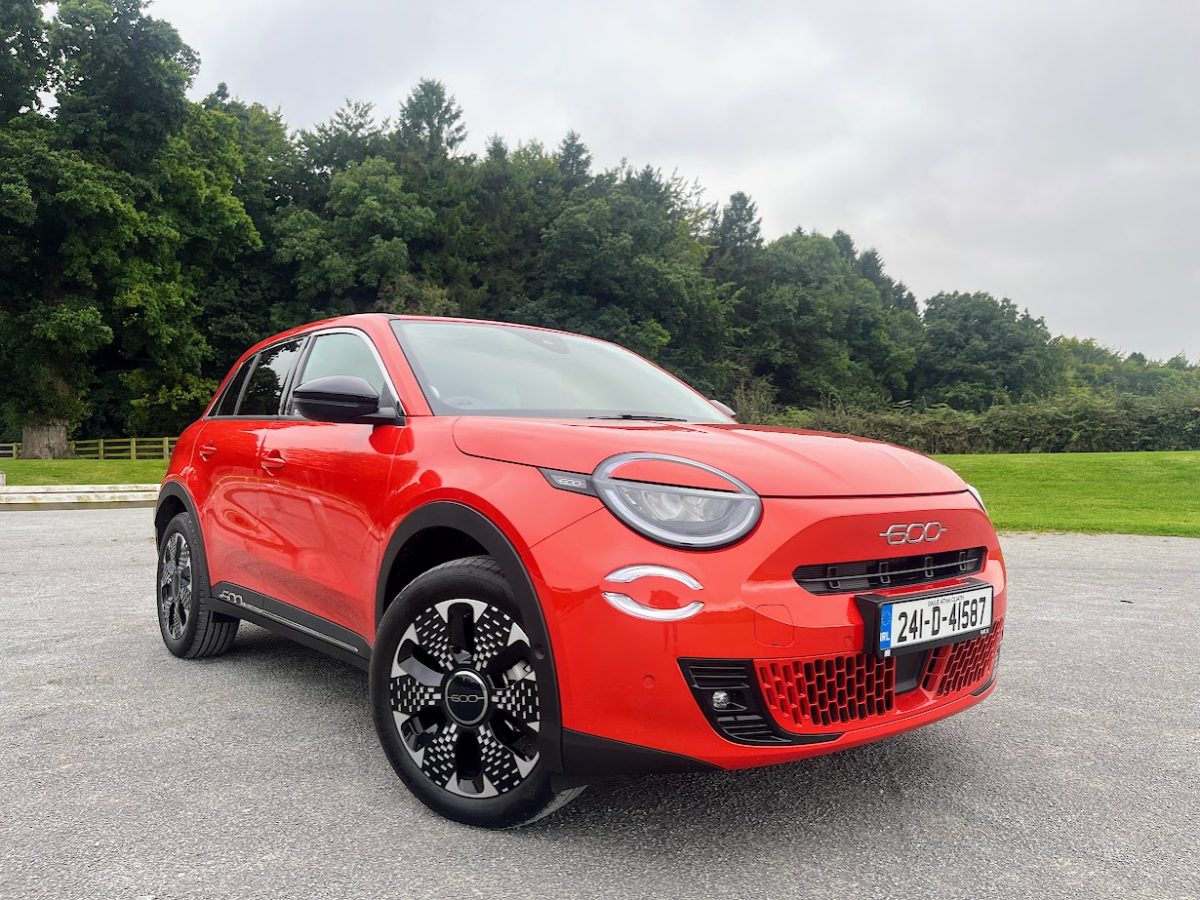
The new 600 is built on the same underpinnings as the Avenger and E-2008 from sister brands Jeep and Peugeot but it does the compact crossover thing with typical Italian flair. It's cute and compact, with a similar iconic headlamp design to the Fiat 500 and '600' blazoned across the front. It sits a small bit higher off the ground than the average hatchback, while there's some neat plastic cladding around the wheel arches and sills to warrant its crossover status. There's a range of colours available including Orange Sun like the car pictured.
There are three trim levels for the hybrid including an entry model, La Dolce Vita and La Prima. The 600 Electric is available in two: Red or La Prima.
The Fiat 600e La Prima on test comes with more bling, 18-inch diamond cut alloy wheels, rear privacy glass, sporty black roof spoiler and 600 etched into the door mouldings.
Is the Fiat 600 bigger than the 500?
Yes it is considerably bigger with more space for passengers, a bigger boot and the added practicality of two extra doors.
Fiat 600 Interior
The cabin is as bright and cheerful as the outside. There are a number of different interior colour schemes available depending on trim. The La Prima gets an ivory dashboard panel to brighten things up and gorgeous ivory leather seats with turquoise detailing. There are lots of hard plastics in the doors and dashboard but the injection of colour and plush seats go a long way to make this an entirely pleasant cabin to spend time in.

There's a two-spoke steering wheel, small digital driver display and slim touchscreen with wireless Apple CarPlay and Android Auto. It's possible to find charging stations through the navigation system and pre-heat the cabin. Single zone climate control comes as standard.
The 600e La Prima is expensive but it has a very nice equipment list including parking camera, adaptive cruise control, wireless smartphone charging, heated front seats with power adjustment and massage function for the driver.
Practicality
The 600 offers five doors for extra practicality, though the door openings are quite narrow. There is Isofix on the two outer seats. The car is quite narrow so will be more comfortable for two rather than three. There's not a huge amount of legroom but children or small adults will be fine.
Fiat 600e boot space
There's a 360 litre boot with a split floor that helps to create space to stow away charging cables. It's a good size for a compact car and only 25 litres less than the hybrid. The rear seats split fold 60:40 to carry larger items. The La Prima model adds a handy powered tailgate.

How much range does a 600e have?
The Fiat 600 electric has a 54kWh battery with a range up to 406 km (WLTP). The battery warranty is 8 years or 160,000 kilometres.
My average consumption over a week of driving was 16.4kWh per 100 kilometres, which equates to about 310 kilometres of range.
What it's like to drive
The Fiat 600 is fun and agile to drive with light steering that makes it brilliant for parking and town driving. The 600e offers more power than the hybrid at 156hp and this is delivered smoothly. There's a few different driving modes including normal, sport and eco. You can select the B mode to increase regenerative braking, though it's never quite one pedal driving.
The 600e feels well planted on the road for such a small car and is largely comfortable over a variety of Irish roads, though it can stumble a bit over cracks and crevices in the tarmac. There's plenty of power for motorway driving but this doesn't feel like its natural habitat - there's a lot of road and wind noise, and it's less efficient at high speeds.

How much is the new Fiat 600?
The hybrid starts at €28,995, while the electric starts from €32,995 including grants. The top of the range 600e La Prima is priced at a more hefty €37,995.
Verdict
The new Fiat 600 is a brilliant new addition to the Fiat range in Ireland. It's very cute and lovable, but it's practical too. The hybrid offers the best value of the range, but the 600e adds a pleasant smoothness and sophistication. It's at home in town and city driving, and copes well with rural roads too, though there are more refined and comfortable crossovers for motorway driving. Overall, it adds its own unique style to the compact crossover class and will be adored by Fiat fans seeking a bit more practicality.
Pros: Chic styling, fun interior.
Cons: Noisy at high speeds, rear passenger space.

____________________________
Written by Caroline Kidd
Founder and Editor of Changing Lanes, Juror for Irish Car of the Year
Fiat 600 Video Review
Watch a video review of the new 600 to see it in action on Irish roads!

MG3 Hybrid Review (2024) | Good car at a great price
Read Caroline's MG3 Hybrid review for everything you need to know about buying MG's new budget small car.
MG has added another hybrid to its range of cars and SUVs in Ireland. The new MG3 slots into the range below the popular MG4. It's a Renault Clio-sized supermini with stylish good looks and a fuel efficient hybrid powertrain.
With sales of electric vehicles taking a hit in Ireland in 2024, there's renewed interest in alternatives like hybrids that are cleaner than traditional petrol cars but don't require charging.
The new MG3 goes up against superminis like the Opel Corsa and Volkswagen Polo, as well as other small hybrid cars like the Renault Clio Hybrid and the popular Toyota Yaris Hybrid.
It goes on sale from a very attractive €22,995, which undercuts key rivals quite considerably on price. But is it good enough?
Let's take a closer look!

Design
Though it's priced well in the market, the new MG3 doesn't look budget and has a smart, compact presence. It's a little softer in its design than the sportier MG4 - more like a classic supermini. Finished in Brilliant Blue, this car is a real looker. LED daytime running lights and LED rear lights come as standard across the range.
What are the different versions of the MG3?
While all versions come as a hybrid, there are three trim levels for the MG3 in Ireland: Essence, Excite and Exclusive. Top of the range Exclusive models add LED headlights and rear privacy glass. Excite and Exclusive models also come with a very attractive set of 16-inch alloy wheels.
Inside the MG3
It's easy to feel comfortable behind the wheel of the MG3. It has a well-finished cabin considering the price and the plastics don't feel cheap. Fabric seats come as standard, though Exclusive models have leather-style seats with cloth inserts for a more plush feel.
The MG steering wheel looks good and a digital driver display comes as standard. There's plenty of adjustment in the driver's seat but the steering wheel only adjusts for rake, not reach.

All versions get a 10.25-inch touchscreen with Apple CarPlay and Android Auto, though disappointingly it's wired not wireless. There are a few buttons underneath the screen to turn the air con on and off or adjust the volume of the radio.
Other standard features include automatic air conditioning, reversing camera and MG Pilot suite of safety and driver assistance features. The top of the range Exclusive model gets a 360-degree camera as well as a heated steering wheel and heated front seats.
Practicality
Passenger space is just about okay for a small car, though legroom in the back is on the tight side. Unusually, the rear seat back rest does not split fold and can only be let down in one entire piece.
How big is the boot of the MG3?
The boot is a respectable 293 litres so on par with rivals like the Clio and Yaris, but smaller than a Skoda Fabia.

Driving the MG3 Hybrid
On the road the MG3 feels swift and responsive for a small car. It's surprisingly powerful with a total of 194hp, completing the 0-100km/h sprint in just 8 seconds. Acceleration is also very smooth through the three-speed automatic transmission and the engine never gets too noisy like in some hybrids.
There are driving modes – Eco, Standard and Sport - and regenerative braking with the option to adjust the strength of it from a menu in the touchscreen.
The MG3 doesn't feel quite as sharp to drive as rivals when the roads get a bit twistier, but at a reasonable pace it's well capable. It's at its best in town and does well on tight country roads too, where the compact dimensions make it easy to get around.
Out on the motorway, it has no problem keeping up with traffic but there is more road noise, which is common among small cars. It's generally comfortable by small car standards but the rear suspension can thud over imperfections in the road surface.
Is the MG3 fuel efficient?
The answer is yes! The MG3 Hybrid has a 1.5-litre petrol engine and a small 1.83kWh battery on board that allows the car at times to run on electric power only, boosting efficiency when driving around town. The official consumption figure is as low as 4.4 litres per 100 kilometres. In my test drive, my consumption averaged between about 4.5 and 4.6 litres per 100 kilometres.

How much does it cost?
The MG3 is very well-priced for the Irish market at a time when even small cars have become pricier to buy. The range starts at €22,995 for the Essence, from €24,745 for the Excite and from €26,745 for the Excellence.
Verdict
MG in Ireland has really hit its stride with strong sales of the popular MG4, but the new MG3 is just as convincing for buyers who feel more comfortable driving a hybrid car without the need for charging.
It looks good and is well-appointed inside for its price. It's also packed with equipment. Rear seating space and a modest boot may limit its appeal as a small family car but if it does work for you, it's a charming little car overall.
At a time when small cars have become very expensive, the MG3 manages to offer great value and is definitely worth a look if you're looking for a small hybrid car.

Pros: Lively hybrid, efficiency, better priced than rivals, well-equipped.
Cons: Not so much fun to drive, rear passenger space.
____________________________
Written by Caroline Kidd
Founder and Editor of Changing Lanes, Juror for Irish Car of the Year

Citroen e-C3 Review (2024)
Read Caroline's Citroen e-C3 review for everything you need to know about Citroen's new compact electric car expected in Ireland before the end of the year.
The new Citroen e-C3 is likely to be one of the most affordable electric cars on sale when it arrives in Ireland later in 2024.
Citroen has a history of building brilliant small cars like the 2CV, Saxo and previous generations of the C3.
The brand is keen to offer choice to buyers in the market for a small car and so the new C3 will be offered with a choice of petrol, mild hybrid and electric.
The new e-C3 uses a 44kWh battery with a range up to 320 kilometres (WLTP) and is designed for more space, more comfort and more character.
I was in Austria with Citroen Ireland to take a closer look.

Styling
Citroen has completely reimagined the C3 and e-C3 for this new generation of the small car. Though it has similar dimensions to the previous model, it's taller and squarer overall with a strong SUV influence to its design. That means it sits higher off the ground than before, has a higher bonnet and more rugged styling cues like skid plates and wheel arch covers. Designed in France and built in Slovakia, the new C3 and e-C3 are also the first Citroens to get the brand's new oval logo. There are a range of colours available as well as contrasting roof colours and clips in the front fascia and C-pillar. Wheel sizes vary from 16- to 17-inch. LED headlamps come as standard.
Interior
The C3 and e-C3 get a brand new cabin design that's pared back to give driver and occupants a feeling of peace and relaxation. Highlights include the new Citroen 'Advanced Comfort' seats, which have thicker foam and add to the lounge-like feel finished in cool grey and black. There is a plush grey fabric material in the dashboard that adds some style though there are scratchier black plastics in the doors. But for a budget car, that's acceptable and there's no squeaks or rattles in this cabin.

Citroen has also introduced a new compact steering wheel and a digital head-up display that works very well. There's also a new 10.25-inch touchscreen though that won't be standard on the entry level trim. Instead there will be a docking station for a smartphone and access to music and maps will be through an app. It's probably worth stretching to the touchscreen as it looks more impressive and is nice to interact with. It also comes with wireless Apple CarPlay and Android Auto for seamless connectivity. Other features include wireless smartphone charging and automatic climate control.
Practicality
The new C3 is about 100mm higher than the previous car so it's easier to get in and out of. It's a particularly nice small car for carrying rear seat passengers and feels notably spacious. It's a bit wider than before and has more headroom, legroom and elbow room. The two tone interiors make it a welcoming place to sit and there are useful features for rear seat passengers like two USB-C ports, pockets in the back of the seats and door bins.
At 310 litres, there's just about 10 litres more boot space in the new car - though it's good to know it hasn't lost any space in exchange for its new electric powertrain. The boot has some depth and is a good shape for carrying things. There are no clever features like a split level boot floor to hide away charging cables, but the rear seats do split fold 60:40.

Battery
The new e-C3 uses a new 44kWh battery with a range up to 320 kilometres (WLTP). It's an LFP battery, chosen because it is more cost-efficient and Citroen is the first to use it among the Stellantis Group of car brands. A heat pump is not included but the e-C3 proved to be very efficient during my time with the car avergaing just 11.5 kWh per 100 kilometres.
A smaller capacity battery will join later with a range in the region of 200 kilometres.
Driving
The C3 and e-C3 are built on a new platform called the Smart Car Platform. It's very efficient and flexible enough to house combustion engines too. On the road the e-C3 offers a smooth and comfortable drive - if not a particularly fast one. It uses a 113hp electric motor and 0-100kmh is a leisurely 11 seconds. That's reasonable for a small car though not fast for an electric one! It's clearly an efficiency and comfort-biased small car. For the first time the C3 gets Citroen's suspension system with progressive hydraulic cushions so this is a car that covers the road softly. The raised height also offers a more comfortable drive over speed bumps and potholes in urban and suburban driving. The electric version adds a reassuring weight from behind the wheel so feels solid in cornering though it's not a particularly fun car to drive. Still for a budget car that's likely to spend most of its time in town and suburbia, it offers an affable drive.

There will also be new safety features like Active Safety Brake, Active Lane Departure Warning and Speed Sign Recognition. A new 'e-Routes' app will allow you to plan journeys, monitor charging status and battery level. The MyCitroën App will manage charging schedules and pre-heating or pre-cooling of the vehicle.
Charging
7.4 kW AC charging comes as standard. DC fast charging is up to 100 kW, which translates to a 20-80% battery charge in just 26 minutes.
Pricing
There will be three trim levels for Ireland: You, Plus and Max with varying levels of equipment. Pricing will be announced closer to launch in Ireland in November of this year.

Verdict
We're starting to see the rise of the budget-friendly small electric car like the Dacia Spring and the BYD Dolphin. The Citroen e-C3 is part of a wave of new European designed and built small electric cars that are going to make electric motoring even more affordable and accessible.
In Europe, the e-C3 goes on sale for less than €25,000. While pricing is yet to be confirmed in Ireland, it will likely be one of the most affordable electric cars on sale.
Offering buyers choice is also a key part of Citroen's philosophy with this car so it's good to know that Irish buyers will be able to choose from a petrol manual or petrol mild hybrid automatic if you like the look of the car but don't want to go electric.
At its core, this is a small car full of character with trendy small SUV-inspired looks that should see it do well in the market and garner quite a few fans. It's also a great small car for carrying passengers with a decent sized boot and bright, airy rear bench.
The new Citroen e-C3 scores for practicality and efficiency, while also being incredibly cute and rugged! If it's priced well, it will be a compelling choice in the new car market.
____________________________
Written by Caroline Kidd
Founder and Editor of Changing Lanes, Juror for Irish Car of the Year

Suzuki Swift Review (2024) | The affordable small car
Read Caroline's Suzuki Swift review for everything you need to know about buying the new Swift in Ireland.
The Suzuki Swift is one of the perennials of the small car class. It's been around for years and it's known for being simple, affordable and fun to drive.
Some manufacturers are moving their small cars to hybrid and full electric - adding the Euros in the process. Others are killing them off altogether, like the Ford Fiesta.
Suzuki is taking a more relaxed approach. The company is launching its new Swift in 2024 as a petrol mild hybrid with a starting price of just €21,495.
And this approach could pay dividends for the Japanese car brand, which has already been growing in Ireland over the last few years. As the race to electric gains pace, buyers seeking simple, affordable motoring need to look elsewhere - likely falling into the arms of Suzuki, among others, whose entire range of cars come under the €35,000 mark new.

Suzuki bestsellers include the Vitara and the iconic Swift. The new Swift is expected in Ireland in April and could be the perfect antidote if you're fed up of crazy car prices.
Styling
The new Swift sees an evolution of its styling so it's still very recognisable. The car hasn't changed much in its dimensions and takes up a similar footprint to before. It looks a little more grown-up thanks to a new front end, gloss black grille and new lights with L-shaped daytime running lights. The Suzuki badge has been moved from the grille to the bodywork. There's also a new bonnet that doesn't appear to sit completely flush with the car leaving a slightly awkward panel gap.
The standard wheel size is 16-inch across the range. Like before, you can opt for a contrast roof. There's a great selection of colours too including the new Frontier Blue and Cool Yellow. The Burning Red Pearl Metallic and Frontier Blue Pearl Metallic colours consist of a three-layer coating for a richer finish.
Around the back, there are more 3D-style light clusters and a wide rear bumper. The Swift's classic sporty stance is complete. It's lost a bit of its cuteness overall but this more mature look is what's required of a global car that will sell in many markets around the world.
Interior
The cabin of the previous Swift was looking quite tired and basic. Thankfully this new one comes on in leaps and bounds. The new two tone pale grey and black interior makes this far more appealing. There are still lots of hard plastics but they are disguised well and don't look as cheap. There's a sporty steering wheel and old-fashioned analogue dials. A new 9-inch touchscreen comes with wireless smartphone connectivity and is a big improvement on the previous version. But no wireless smartphone charging option is a disappointment.

Otherwise it's an exceptionally well equipped car. Just two trim levels, Motion and Ultra. Standard equipment includes a reversing camera, push button start, four electric windows, heated front seats, automatic air con and lots of standard safety features like adaptive cruise control, blind spot monitoring and traffic sign recognition.
Practicality
The boot can only muster about 265 litres, which is a good way off the best in class. Still it will fit a few bags or suitcases and the rear seats can split fold. The Swift is surprisingly roomy in the back with decent headroom and legroom for adults from time to time, though children should be fine. It's short on amenities or storage with just space in the doors for a bottle. However, in a smart move Suzuki has given the Swift conventional rear door handles rather than the hidden ones from the previous car, which makes access in and out easier - particularly for small children.
Engine
The engine in the Swift is brand new. It's a 1.2-litre mild hybrid just like before, but it's gone from four to three cylinders. It offers about 82hp and fuel consumption as low as 4.4 litres per 100 kilometres. A little more torque makes it more responsive to drive than before though 0-100 km/h is a leisurely 12.5 seconds. Motor tax is €180 per year for the manual or €190 per year for the CVT.

Driving
Still it feels a lot quicker on the road. That's because the Swift is a true lightweight. It weighs less than one tonne. It comes with a five speed manual gearbox or a CVT automatic and is an absolute hoot to drive.
Suzuki has reduced the roll in corners and the Swift is mighty fun out on the open road. It's not too noisy thanks to a bit more sound insulation and offers a nicely cushioned ride for a small car.
We didn't get to test it out on the motorway but it excelled on rural roads and in suburbia.
Pricing
The 2024 Suzuki Swift 1.2 Motion goes on sale from €21,495 with a manual gearbox or from €23,495 with a CVT. The Ultra model with more equipment is available from €22,695.

Verdict
Suzuki sells the Swift in 169 countries and it has sold over 9 million units since it became a global model in 2004.
In Ireland it's one of the brand's bestsellers and has been for many years.
Suzuki is not in a hurry to go electric but its entire range now has some sort of hybrid assistance to boost efficiency. We are likely to see the brand's first EV in 2025 but the Swift still satisfies a market looking for a simple, affordable fuel-powered car.
And let's not forget the Suzuki Swift is still astoundingly good value for a small car in 2024. The interior and equipment levels are a massive improvement over the old car. It's reasonably practical too.
Cheap to run and fun to drive, the new Swift is one of the surprise highlights of the year so far.
____________________________
Written by Caroline Kidd
Founder and Editor of Changing Lanes, Juror for Irish Car of the Year

Mazda2 Hybrid Review (2024) | Fuel-sipping hybrid
Read Caroline's 2024 Mazda2 Hybrid review for everything you need to know about buying Mazda's hybrid small car in Ireland.
The Mazda2 Hybrid joined the Mazda range for the first time in 2022. Sold alongside the Mazda2 petrol, the Mazda2 Hybrid is essentially a rebadged Toyota Yaris.
The hybrid supermini is an important step in helping the Japanese brand to reduce emissions and offer customers a fuel-sipping hybrid option (without the cost of developing its own).
Toyota is a leader in hybrid for over 25 years so this car certainly has good provenance. But is it distinct enough?
Now in 2024, Mazda seeks to distinguish this car a little more with a few styling tweaks from its own European Design Studio.
I travelled to Barcelona to take a first look at the new Mazda2 Hybrid, ahead of its arrival in Ireland this March.

Styling
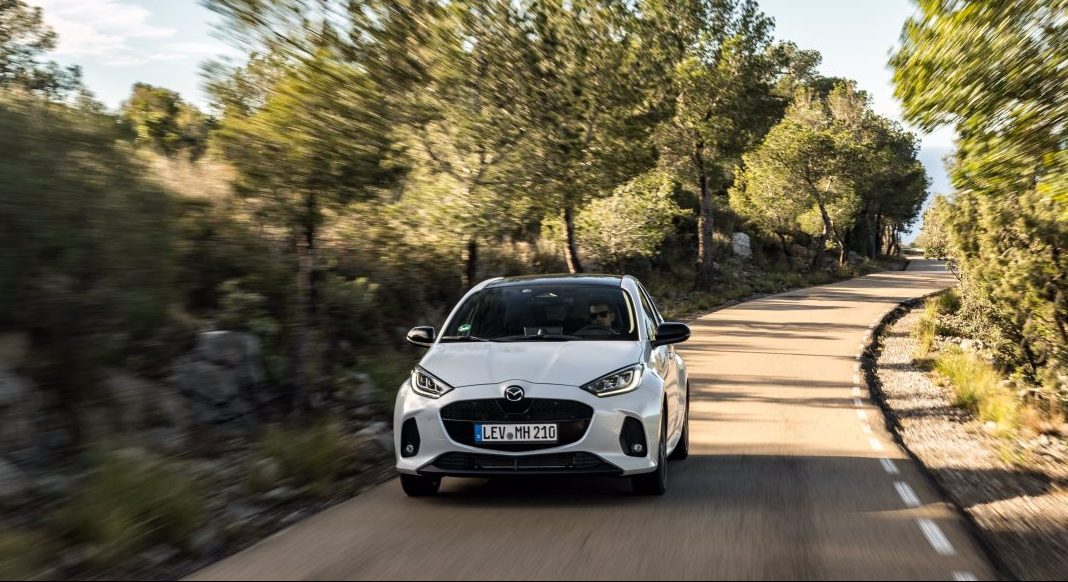
The Mazda2 Hybrid is a Yaris in disguise but this time around Mazda has done a little more than a simple rebadging exercise. Mazda's version of the famous small car gets a new face with a unique bumper and Mazda five-point grille. At the back, the light clusters are separated by a body coloured garnish. Black side mirrors come as standard. The Homura models add glossy black trim, LED headlights and 17-inch alloy wheels. This is a very convincing spec for the Mazda2 Hybrid, with a sporty, squat stance on the road. Glass Blue is added as a new colour.
Overall the design tweaks do give the Mazda2 Hybrid a modicum more style than before, yet it still looks more like a Toyota than a Mazda. This may be disappointing for Mazda fans but doesn't take away from the fact that it's a very accomplished small car underneath.
Interior
Again, there's very little inside to distinguish the Mazda2 Hybrid from the Yaris, except for a Mazda badge on the steering wheel and printed on the mats. It's a solid, well-made interior - though it lacks the artistic flair of a true Mazda cabin. It benefits from the same digital upgrade the Yaris receives this year, including larger and more modern touchscreens (9” to 10.5”) with wireless Apple CarPlay/Android Auto, and the availability of an impressive full digital driver display.
Standard features include a reversing camera, leather steering wheel, electric windows, automatic air con and adaptive cruise control. Going up the trim levels adds things such as smart keyless entry, parking sensors, wireless mobile phone charging and even a head-up display and panoramic roof on the very top of the range Homura Plus model.

Practicality
At 286 litres, the boot is average for a small car but will fit two cabin bags side by side. The rear seats also split fold 60:40. Rear legroom is on the tight side so it's certainly one of the more compact models on sale - though you will get adults in there from time to time and children will be fine.
Engine
The Mazda2 Hybrid uses Toyota's 1.5-litre petrol electric hybrid with 116hp, just like the latest Yaris. It's incredibly frugal with fuel consumption quoted between 3.8 - 4.2 litres per 100 kilometres. Real world consumption is not too far off that, though consumption naturally increases at high speeds on the motorway.
Driving
The Mazda2 is a solid and capable small car on the road. It handles well without being particularly fun to drive. But the hybrid does feel more lively overall than a Mazda2 petrol, which can feel a bit lethargic, particularly on motorways. The Mazda2 Hybrid has no problem keeping up with the best of them on the motorway though it does get quite noisy with a lot of tyre and wind noise at high speeds. It's at its best in town and city driving when the hybrid drive really comes into its own. At low speeds, it frequently dips into EV mode, running silently on the power from its electric motor with no emissions from the exhaust. For this reason it's a very convenient option for buyers who want to be a little more environmentally conscious but without the need for chargers and charging - the small capacity battery is topped up in braking and deceleration.

Pricing
There are four trim lines confirmed for Ireland: Centre-line from €27,700; Exclusive-line from €29,550; Homura from €32,300; and Homura Plus from €34,700.
Verdict
It's challenging to put an individual stamp on a car as popular and well-known as a Toyota Yaris. Mazda has tried again with the 2024 Mazda2 Hybrid and the results are more convincing than before, particularly in the sporty Homura trim line. It's an attractive car though Mazda fans are likely to be a little underwhelmed by it overall as it lacks the artistic flair and craftmanship of a true Mazda. But, it's not a bad car: it's incredibly frugal and well-made with a modern, digital cabin and plenty of high-end safety features. It's lack of distinction from the Yaris might let it down in the wider market. But within Mazda's range, it's a frugal and lively compact car.
____________________________
Written by Caroline Kidd
Founder and Editor of Changing Lanes, Juror for Irish Car of the Year


Renault Clio Review (2024) | A brilliant small car
Read Caroline's Renault Clio review for everything you need to know about buying Renault's popular small car in Ireland.
The Renault Clio is an international bestseller and one of the French brand's best loved small cars. It's recently been updated to keep it competitive with a few small tweaks to the styling, addition of a new Esprit Alpine trim level and some enhanced equipment onboard.
Available as a simple petrol manual or as an even more fuel efficient hybrid, the 2024 Renault Clio range kicks off from €24,845.

What's so special about the Renault Clio?
There are few small cars as chic and stylish as the Renault Clio. The facelifted Clio gets a new front end that gives it a meaner and sportier look, particularly in the top of the range Esprit Alpine - inspired by Renault's Alpine brand of sports cars.
The grille now stretches the full width between the LED headlights, while the new F1-style blade in the front bumper is finished in grey on the Esprit Alpine. Another striking feature is the new half diamond shaped LED daytime running lights that give it some real dynamic appeal.
Alloy wheel sizes start at 16-inch, with the Esprit Alpine getting a fancier 17-inch diamond cut set with blue or grey centre caps, depending on the body colour.
There are new clear covers for the rear lights but otherwise it's business as usual for the Clio. It's still one of the best looking small cars on sale.
There are a few tweaks inside too. Nothing major but the Esprit Alpine replaces the old RS Line and has a few sporty additions.

Inside the Clio Esprit Alpine
The Clio's cabin has matured very well with impressive digital tech on board and an upmarket feel - particularly in the new Esprit Alpine (from €28,345).
Front sports seats come with blue contrast stitching and Alpine logos to add a sporty feel. There's a fabric dashboard panel with a French flag to remind you what you're driving and Tricolour stitching in the steering wheel too.
Entry level models come with a 7-inch digital driver display and 7-inch touchscreen that's easy to use, with now wireless Apple CarPlay and Android Auto to make smartphone integration even simpler. The Esprit Alpine gets the flashier 10-inch digital driver display and 9.3-inch portrait-style touchscreen.
Standard features on the entry level Evolution model include keyless entry, automatic air con and rear parking sensors. The Techno adds a reversing camera and wireless smartphone charging, while the Esprit Alpine is the most luxurious of all with heated steering wheel/heated front seats and safety equipment like adaptive cruise control, blind spot warning and rear cross traffic alert.

The Clio feels roomy enough inside for a small car though the back seat will be more comfortable for two rather than three. The petrol models are best for boot space with a Golf-beating 391 litres. Opt for the hybrid and this goes down to 301 litres. But it's still a practical space for a few suitcases or shopping bags.
Driving the Clio Hybrid
The Clio is available with a 1.0-litre turbo petrol engine with 90hp and a 6-speed manual or as a 1.6-litre hybrid that promises even greater fuel efficiency.
The hybrid is more expensive to buy (from €30,545) but offers a few benefits particularly in town driving where it can run for up to 80% of the time on its small capacity battery alone powering just the electric motor to turn the wheels - just like a Toyota Yaris Hybrid. Nor does it require a plug, with the battery being topped up during braking and deceleration.
It's smooth to drive with a multimode automatic transmission making it simple too. It has more power (145hp) than the entry level petrol and contributes to a more mature feeling on the road. Slot it into the ‘B’ mode to increase regenerative braking and you can adjust the driving behaviour somewhat with the Multisense driving modes.

Over my time with the car, average fuel consumption was 4.9 litres per 100 kilometres, making it cheap to run too.
The Clio is good fun to drive with direct steering and good body control through bends. Comfort and refinement levels are pretty good for a small car though it does get noisy over coarser road surfaces and doesn't do much to take the edge off the bumps and holes of Irish rural roads.
Did you like it?
It's an easy yes! It's hard not to find yourself endeared by the Clio's charm. It's compact enough to be fun, yet big enough to offer some decent practicality. It's super stylish and well-equipped making it one of the most desirable small cars on sale.
It's hard to justify the hybrid's price tag over the basic petrol though it is a more sophisticated offering overall, cleaner and more efficient.
Either way, the Clio is still one for the shopping list.

____________________________
Written by Caroline Kidd
Founder and Editor of Changing Lanes, Juror for Irish Car of the Year