
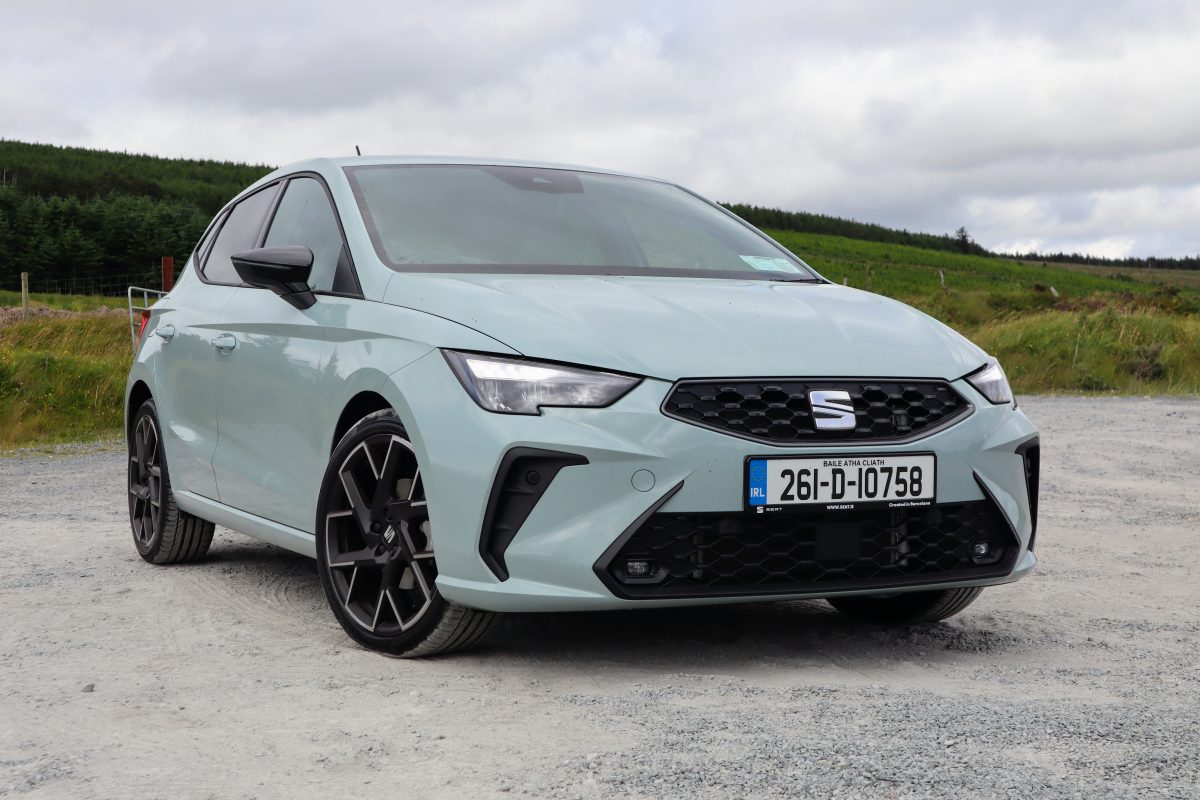
 The 2026 Seat Ibiza is now on sale in Ireland
In this Seat Ibiza review, Caroline Kidd tests Seat’s long-standing small hatchback to see if it’s still worth buying in 2026.
Seat Ibiza Review Overview
The Seat Ibiza has long been one of the brand’s best-known models and a familiar sight on Irish roads. The current generation arrived back in 2017 to great success, praised for its sharp handling, practical interior and value for money. It was a sort of pretty Volkswagen Polo and was priced better too.
In recent years, attention has shifted towards sister brand Cupra as it expanded its line-up, leaving questions about Seat’s future. However, the Ibiza has now received a welcome update for 2026, bringing refreshed styling, improved interior materials and upgraded technology to help it stay competitive. It goes a long way to sweeten the Ibiza, however it does show its age in places and it’s hard to ignore the value that can be had in the car market these days in small electric cars and hybrids.
Pros
- Sharp handling
- Sporty looks, particularly FR versions
- Practical, easy to use interior and infotainment
Cons
Which Seat Ibiza trim should I buy?
For 2026, Seat has gently restyled the Ibiza with key changes including a new hexagonal grille design with diamond-shaped mesh in a matt or polished finish. There are also new slimmer, full LED headlights with a refined light signature and new bumpers front and rear, with a sporty diffuser style finish depending on trim. From the front, larger air curtains and lower central intake make the latest Ibiza different but familiar at the same time. There are also new alloy wheels designs and new colours like Oniric Grey.
There are four trims to choose from: SE, SE Plus, FR, Black Edition. Entry level SE models come with 16-inch alloy wheels, LED headlights and taillights. SE Plus versions upgrade the wheels to 17-inch on those fitted with the TSI engine.
It’s fair to say FR versions as always look the best thanks to a sporty makeover with a special set of 18-inch alloy wheels, black wing mirror caps, dark aluminium FR badge on the boot lid and a B-pillar logo. Inside there are also bucket seats and drive modes (eco, normal, sport and individual).
Inside all versions have an 8-inch touchscreen with wireless smartphone connectivity, digital driver display, air conditioning and cruise control.
SE Plus adds height adjustment for the passenger seats, in addition to the driver’s seat, parking camera and ambient lighting.
Options include wireless smartphone charging and heated front seats for extra cost.

 The cabin of the 2026 Seat Ibiza feels a bit dated
What’s the 2026 Seat Ibiza like to drive in Ireland?
Power comes from a 1.0-litre, three cylinder petrol engine with 80hp and a 5-speed manual gearbox (reserved for SE and SE Plus). Or a 1.0-litre TSI turbo petrol engine with 95hp or 115hp, and choice of 6-speed manual or 7-speed DSG automatic.
I tested the 1.0-litre TSI with 115hp and the DSG gearbox. It feels nippy to drive with 0-100 in 9.9 seconds. It shifts mostly well with the automatic, though if you catch it unawares to overtake quickly on a motorway, there is a small but of lag.
The Ibiza still feels sharp to drive after all these years, responding well to driver inputs and good body control through bends. It still gets by for comfort levels though it’s bumpier on rural roads. It has fallen behind on refinement, with a lot of road noise, particularly at high speeds on the motorway.
What is the fuel consumption of the 2026 Seat Ibiza?
Fuel consumption as low as 5 litres is possible in the 1.0TSI with 95hp. The 1.0TSI DSG 115hp tested here quotes consumption at 5.5 litres per 100 kilometres. In real world driving on Irish roads it achieved an average fuel consumption of 6 litres per 100 kilometres.

 The 2026 Seat Ibiza is still fun to drive for a small hatchback
2026 Seat Ibiza Interior & Practicality
While the Ibiza’s basic interior layout remains the same it has had a revamp over the years that sees it get more modern digital driver display and wireless Apple CarPlay/Android Auto.
For the update, Seat has revised the seat upholsteries and added more soft-touch materials to lift the quality. While there’s no hiding the fact that this is an older generation car (cue the hefty gear selector and manual handbrake), there’s an air of practicality and intuitiveness to the Ibiza’s cabin that many buyers may prefer to the screens and gadgets that dominate many new cars.
It’s also one of the most practical small cars of its generation with good legroom for rear seat passengers and a competitive 355-litre boot. There are split folding rear seats and Isofix points on the two outer seats.

 The Ibiza has a good sized boot of 355 litres
2026 Seat Ibiza Pricing for Ireland
- Seat Ibiza SE: from €24,340
- Seat Ibiza SE Plus: from €25,560
- Seat Ibiza FR: from €29,065
- Seat Ibiza Black Edition: from €30,205
Verdict: 2026 Seat Ibiza
The Seat Ibiza gets a welcome update in 2026 and a little bit of love that keeps it at the races against newer competitors. It still offers style, sharp handling and good petrol engines, making it an appealing choice for buyers who value simplicity over excessive technology.
However, its age is beginning to show. Refinement on the motorway falls behind newer rivals and others feel more modern inside. There is a threat to the Ibiza from the numerous affordable small electric cars now on sale and upcoming models like the Cupra Raval and ID. Polo. Pricing has also crept up, particularly in the higher trims, which makes it less of a bargain these days.
Even so, the Ibiza continues to deliver where it matters most. It’s practical, fun to drive and economical to run, and for buyers looking for a dependable, well-rounded petrol supermini, it’s worth a look.
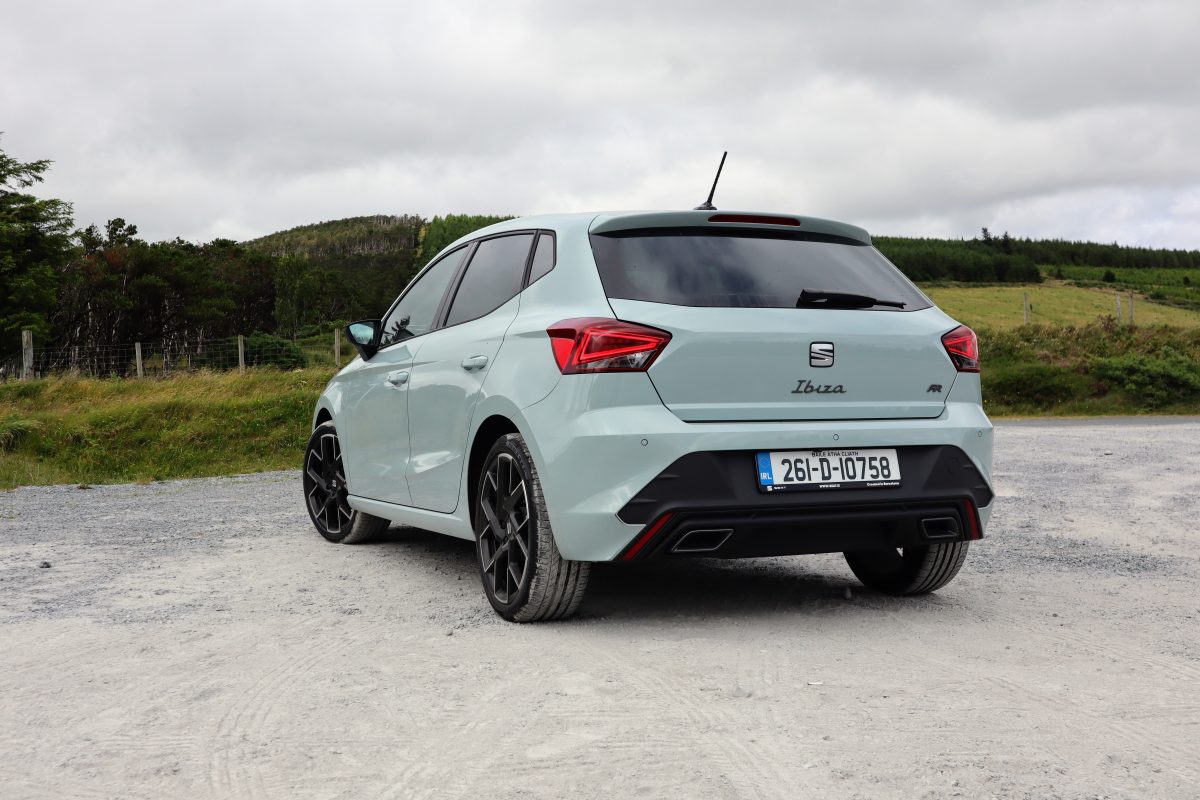
 The Seat Ibiza is stylish and sporty but faces tough competition from small hybrid cars and EVs
Key facts
Model tested: Seat Ibiza FR 1.0TSI DSG
Price: €31,035
Engine: 1.0-litre turbo petrol
Power: 115hp
Motor tax: €200
___________
Written by Caroline Kidd
Founder and Editor of Changing Lanes, Juror for Irish Car of the Year