

Peugeot Rifter Review

The new Peugeot Rifter has just arrived in Ireland and goes on sale priced from €23,540. The Rifter replaces the Partner Tepee MPV, with a focus on practicality and versatility at good value pricing. Caroline drove from Cork to Dublin in the new Peugeot Rifter at the recent Irish press launch.
Styling
The Peugeot Rifter is essentially a van-based MPV and there is only so much you can do to make a van attractive. But Peugeot has persevered, borrowing SUV characteristics from the 3008 and 5008 SUVs - a high ride height, large wheels, and wheel arch and rear bumper protection. It’s also available in a high spec GT Line, which gives the Rifter considerable more visual chutzpah at a price.
Interior
The interior of the new Peugeot Rifter does not betray its van roots – you’ll know you’re driving something a bit more basic. There’s loads of hard plastics and not much in the way of glamour. But the Rifter still gets a version of Peugeot’s quirky i-Cockpit and there is a slick looking touchscreen in the centre of the dashboard.
Practicality
Practicality is the Rifter’s middle name! The new Peugeot Rifter is available in two lengths, with 5 or 7 seats. This van-based MPV maximises space for occupants with its dimensions and boxy shape. There is loads of headroom and legroom and three individual seats in the rear. There is extra storage and cubby holes throughout the cabin. There’s a wide boot opening with a separate opening window, 775 litre boot and sliding side doors for ease of access.

Engines
There are two petrol engines and four diesel engines: a 1.2 PureTech petrol 110bhp S&S 6-speed; a 1.2 PureTech petrol 130bhp automatic 8-speed S&S (April 2019); a 1.5 BlueHDi diesel 75bhp 5-speed; a 1.5 BlueHDi diesel 100bhp 5-Speed; a 1.5 BlueHDi diesel 130bhp 6-Speed S&S; and a 1.5 BlueHDi diesel 130bhp automatic 8-Speed S&S.
On the road
If you are used to driving a car, the Peugeot Rifter might feel peculiar for a bit. But after a while you soon settle in. The test car was powered by the 1.5-litre BlueHDI diesel with 100hp and a five speed manual gearbox. Power was adequate and in car refinement and comfort is fine for long journeys. We’ll be spending more time with the Rifter later in the year and will bring you a full road test and driving impressions then!
Equipment
Peugeot Ireland is selling the Rifter in three trims: Active, Allure and GT Line.
Standard equipment includes 8” touchscreen, digital instrument panel, 16” wheels, full size spare wheel, air conditioning, Active Safety Brake, Lane Keeping Assist and Speed Limit Recognition.
The Allure gains 16” alloys, rear parking sensors, auto lights and wipers, leather steering wheel, front fog lights, folding front passenger seat, electric parking brake, 3 individual magic flat seats in row 2 and electric rear windows.
The GT Line adds 17” alloys, keyless access and start, High Beam Assist, Traffic Sign Recognition and Advanced Driver Attention Alert, dark tinted rear windows, front and rear parking aid, dual zone climatronic air conditioning and GT Line styling.

Pricing
Active models are available from €23,540, Allure from €25,570, and GT Line from €28,400.
Rivals
The Peugeot Rifter will go up against the Ford Tourneo, Opel Combo Life and Volkswagen Caddy Life.
Verdict
The Peugeot Rifter enters the MPV market with a price and engine range advantage over the Volkswagen and Ford rivals. On first glance, the Rifter deserves a closer look as the blend of space and practicality make it searingly good value. I look forward to bringing you a full report after a road test later in the year!

Caroline Kidd


Me And My Car: Stamatis Meimaris's Peugeot 208 GTi
Stamatis Meimaris from Greece is a Changing Lanes follower and here he tells us about his Peugeot 208 GTi.
1. Tell us about your car.
I have a 2015 Peugeot 208 GTi, 1.6-litre turbo petrol with 200hp.
2. How many years have you owned this car?
I have my car two and a half years.
3. Why did you choose this car?
I chose this car because I loved its design, the horsepower and the technology of the "i-Cockpit".
4. What do you like about this car?
First of all, I like the high quality of my car. Also, it's amazing that this is a complete sports car but at the same time, it has a very elegant look. I chose to buy it in black because I think that this is the most representative colour for this car. The way this car feels on the road is really impressive!
5. Is there anything you would change about your car?
I'm very satisfied with my Peugeot. For aesthetic reasons only I would like to change the wheels and put on a bigger size.
6. What's in your glovebox?
In my glovebox you can find my car's documents, a microfibre cloth and an umbrella for the rainy days (haha).
7. Favourite memory of the car?
My favourite memory, and I think that this memory will forever be my favourite, was the first time I saw my car and I touched it and I drove it for the first time. It was a really unique feeling and I believe that I will never forget it.

8. Who would your ideal passenger be?
My ideal passenger is myself and my favourite music because it inspires me and I can focus on the driving and enjoying my ride.
9. Three words to describe your car.
Dynamic, Premium, Sport.
You can follow Stamatis's adventures in his Peugeot 208 GTi on Instagram here.

Peugeot 3008 Review (2017)
The much anticipated new Peugeot 3008 SUV arrived in Ireland earlier in 2017. SUVs are much in demand now as alternatives to traditional family hatchbacks and saloons. Buyers truly are spoilt for choice with the majority of car manufacturers now offering a compact SUV in their range.
Peugeot has adjusted to this new world order and for the second generation of the 3008, they have led with a more rugged SUV-like design for this popular model. The new Peugeot 3008 is already carving out its own niche in the compact SUV segment as something of a style icon and is also the title holder of 2017 European Car of the Year.
The new Peugeot 3008’s design is attractive and different (and even a little futuristic in places), but it’s exactly what’s needed in a sensible but often staid segment where it can be hard to differentiate models. The compact SUV genre does not seem to always spark that much creativity in the quest for practical family transport, but the 3008 will turn heads.

Of course, beauty is nothing without function, and Irish buyers are smart and want value for money at this end of the market. Pricing for the new Peugeot 3008 starts at €25,995, which is very competitive among the likes of the Nissan Qashqai, Renault Kadjar and Hyundai Tucson.
The Peugeot 3008 is based on the 308 hatchback’s platform, and will seat five. There is plenty of rear leg room and even the middle seat passenger will find a flat space for their feet. Move around to the boot and you will find 520 litres, which is also very generous. The loading sill is low, which makes loading easy and pain-free.
Car interiors can be quite formulaic but Peugeot has payed the interior of the new 3008 plenty of attention. The innovative ‘i-Cockpit’ has been overhauled and Generation 2 debuts in the 3008 with more tech and in a more user-friendly package. A digital instrument panel comes as standard and the quality and graphics look fantastic. Beneath that is a compact steering wheel. To the left you have your infotainment screen positioned on top of the dash and a number of beautiful shortcut keys that make switching between functions like phone, radio and climate control very easy.
The quality of materials are some of the best in the segment and my GT Line test car had a stunning mix of materials that definitely would allow it to compete with the more expensive contenders in the class.

The 3008 SUV has a similar range of engines to the 308 hatchback, including an award-winning 1.2-litre 130hp turbo petrol engine and a 1.6-litre diesel with 100 or 120hp, all with competitive running costs and emissions as low as 103g CO2 on some models. Manual and automatic gearboxes are available, while Advanced Grip Control for extra traction in low-grip conditions is an option on all versions, and standard on GT.
My test car had the 1.6-litre diesel with 120hp. This is a strong and well proven engine for Peugeot and provides adequate power. The cabin is also well-insulated so the 3008 has a serene ambience with little engine noise.
On the road, the new Peugeot 3008 is quite the sharp mover. There is loads of grip and the car stays remarkably flat through corners for an SUV. The steering also weights up efficiently. The trade-off is a firm edge to the suspension that means potholes and other rough surfaces transmit some noise and bumps to the cabin.
Petrol models start at €25,995 for a 1.2-litre turbo petrol with 130hp, while diesels start from €26,515 for a 1.6-litre with 100hp. There are five trims for Ireland: Access (from €25,995), Active (from €28,295), Allure (from €29,855), GT Line (from €33,225) and a range topping GT (€44,395).

Standard feature include multifunction steering wheel, Bluetooth, cruise control with speed limiter, four electric windows, air con, and safety equipment including Speed Limit Information with Intelligent Speed Adaptation, Driver Attention Alert Level 1 and Lane Departure Warning.
The level two Active model is a better specced car with extra safety equipment including Advanced Emergency Braking System with video camera and radar and Front Collision Warning, and rear parking sensors, reversing camera, 17” alloy wheels, alloy roof rails, electric parking brake with Hill Assist, automatic headlamps and wipers, front fog lights and automatic air conditioning.
My GT Line car has some styling upgrades inside and out, and also keyless entry and start, full LED headlamps, automatic parking, 18” alloys and an opening panoramic glass roof.

It’s fair to say that the new Peugeot 3008 is a major coup for Peugeot at a time when there is huge demand for family SUVs in this price range. The new Peugeot 3008 is the brand’s boldest move to date to really move upmarket and in higher trims, like the GT Line model on test, this car can easily hold its own against more established ‘premium’ competition like the Volkswagen Tiguan. Yes, you will pay for it, but the 3008 comes with an impressive equipment list and the quality of the interior means it feels anything but cheap. For buyers tired of the usual suspects in this class, the Peugeot 3008 offers something refreshingly different.
Model tested: Peugeot 3008 SUV GT Line 1.6 BlueHDi 120bhp 6-speed
Price: €34,925 (Range starts at €25,995)
Engine: 1.6-litre turbo diesel
Power: 120bhp
Torque: 221Nm
0-100km/h: 11.2 seconds
Top speed: 189km/h
Claimed economy: 71mpg
CO2 emissions: 104g/km
Motor tax: €190 per year
Caroline Kidd
If you are looking for an alternative upmarket compact SUV you might also like this review of the Volkswagen Tiguan.

Peugeot 2008 Review (2016)

The Peugeot 2008 arrived in Ireland in 2013 when the compact crossover boom was really taking hold, but since then the popular 208-based crossover has proved to hit the right spot for its chunky looks, practical interior and affordable pricing. The 2008 is Peugeot’s bestselling model in Ireland and accounts for just over 10% of the compact crossover segment here. Despite the glut of similar models from the likes of Opel, Nissan, Renault and Mazda, the 2008 has still managed to make impact here on the market.
A mid-life refresh should further strengthen the 2008’s cause, and this summer the 2008 received some updates in the styling department, new equipment, new colours and a new top of the range GT Line trim. A wide range of new ‘PureTech’ petrol engines and proven diesels keep the car fresh and competitive too.
In the metal, the 2008 doesn’t sit that much higher than a conventional hatchback, but it’s enough to give a more raised seating position inside. Some rivals have a bit more height, but the 2008’s more low slung profile has its advantages as we will get to later in this review. A new grille, with large Peugeot lion badge at the centre might not seem all that drastic, but here it actually does give the 2008 a lot more presence, and viewed front on, the 2008 looks more like an SUV than ever before.
There haven’t been any major changes to the layout of the cabin, but it still looks very smart and there is a plush feel to it. Infotainment is provided via a 7” touchscreen on all but the base trim, and the new 2008 retains the Peugeot ‘i-Cockpit’ interior - a compact steering wheel and a head up instrument panel sitting above it. A large raked back windscreen gives the cabin an airy, spacious feel, and a panoramic glass roof on Allure and GT Line trims only amplifies this.

The Peugeot 2008 packs a lot in for what is still a very compact car. There is seating for five, and despite the compact size, the space inside is good, though like many of its compatriots, the middle seat is a bit squeezed as this car is still not much wider than a supermini. The boot is a big asset here because it’s 422 litres, so significantly bigger than your average supermini, and with a very low sill for easy loading.
Power comes from the 1.2-litre PureTech petrol in three different power outputs (82bhp, 110bhp, 130bhp) and the 1.6-litre BlueHDi diesel (75bhp, 100bhp, 120bhp). Manual and automatic transmissions are available, including a new 6-speed automatic gearbox. CO2 emissions range from just 90g to 114g/km, and all power trains keep fuel consumption under 4.9 litres/100km.
I tested Peugeot’s 1.2-litre Puretech with 110bhp in the new 2008. It offers more zip than the entry level 82bhp owing to the addition of a turbo, and is very responsive, but refinement is a key quality of this engine. It performs like a larger engine, and there is no loss of robustness here despite its small capacity and three cylinders. While this engine is available with a manual gearbox, my test car had the new 6 speed ‘EAT6’ automatic gearbox and for a small engine, they work well together with smooth power delivery.
Yes the automatic does impact on economy, but this is small according to official figures from Peugeot. They claim 59mpg for this set-up, compared to 64mpg in the manual, but both models still fall into the same tax band (€190 per year), so this is still very economical motoring. I got 46mpg during my test drive.

In town, the Peugeot 2008 comes into its own because it is so compact and the steering is light and easy. There is some noise on the motorway but it does well for this segment and is comfortable for the long haul trips. While the steering does weight up out on the open road, it can still feel a bit woolly through fast corners because there is no great sensation of resistance of the tyres against the tarmac as you turn the wheel, so a 208 hatchback is more fun in this regard. But because the 2008 is quite low-slung compared to other cars of its ilk, it’s less top heavy through corners.
Elsewhere, equipment levels are good and entry level Access models including air conditioning, Bluetooth, front electric windows, cruise control, speed limiter, spare wheel and roof bars, while Active trim includes automatic dual zone air conditioning, 7” touch screen, auto lights and wipers, front fog lights, 16” alloy wheels, front and rear electric windows, leather steering wheel, rear parking sensors, electrically folding door mirrors and rear privacy glass.
The Allure trim is more luxurious again with a panoramic roof, half leatherette trim, MirrorLink and Apple Car Play, rear view parking camera and some updated styling features.
There’s a new top of the range GT Line with 17” alloys, satellite navigation, aluminium sports pedals, gloss black roof bars, a body coloured spoiler with gloss black trim, and black door mirror shells. While the 2008 is not sold with a 4x4 option, a Grip Control advanced traction system improves traction in snow, mud and sand from a dial on the centre console, and that’s standard on the new trim.
Basic petrol models start at €19,400 for a 1.2-litre 82bhp in Access trim and the diesels start at €20,785 for the 1.6-litre diesel with 75bhp in Access trim. Active models are available from €20,445. Allure models (from €22,400) and GT Line (from €24,835) will stretch the budget a bit more with one of the more powerful engines under the bonnet.

For any buyer stepping up from a supermini, the Peugeot 2008 brings all the benefits of a compact car, but with more practicality as the boot here has great access and inside the car is a good deal more spacious too. After the facelift, the 2008 is a bit more bold in stance but the appearance of the car is still quite conservative compared to rivals.
The 2008 brings a high level of finish and maturity to this class. The cabin quality is one of the best and the design is aging well, still looking smart and with good functionality through the touchscreen infotainment system. The overall driving experience is one of refinement, and the quality of engines on offer is a big boon for the 2008. If you are looking for a small petrol crossover in particular, the Peugeot 2008 1.2-litre Puretech 110bhp has to be one of the best.
Caroline Kidd
Model Tested: Peugeot 2008 1.2 PureTech 110bhp Automatic GT Line
Price: €26,435 (Range starts €19,400)
Engine: 1.2-litre turbo petrol
Power: 110bhp
0-100km/h: 10.3 seconds
Economy: 59mpg
CO2 Emissions: 110g/km
Motor Tax: €190 per year

Peugeot 308 GTi Review

Peugeot know a thing or two about building a performance car and their sporty hatchbacks have been getting petrolheads all in a lather for over 30 years. Cars like the Peugeot 205 GTi and 306 GTi-6 belong to the annals of greatest cars of all time, and these cars still have the capacity to strike up an emotional response in adults akin to those otherwise reserved for recollections of since departed dear friends and relatives. Great cars like great people leave lasting impressions.
So what of the new Peugeot 308 GTi? What to do with the weight of expectation on your broad shoulders?
Before meeting the Peugeot 308 GTi for the first time, it was reassuring to see that this car is now officially the “Peugeot 308 GTi by Peugeot Sport” because we know that Peugeot Sport has already done some great things, like smash the record for the Pikes Peak Hill Climb with a rally spec 208, and won the Dakar Rally in a monster spec 2008.
But could the brains behind these victories take a supermarket spec 308 and turn it into one of the best hot hatchbacks on the market right now?
Watch my video review or scroll down to read the rest of the review:
[youtube https://www.youtube.com/watch?v=b8xdxdrgj_g]
Step 1: Make it look the part. The 308 is one of the better looking hatchbacks out there so this would be easy. The new 308 GTi looks pleasingly beefy, especially from the back where two larger than life exhaust pipes declare this car’s intentions. Still there’s nothing brash here: a modest body kit, new upright grille with inset Peugeot lion, ultra-light 19” aluminium alloy wheels on the 270hp model (18” alloys on 250hp model), red Peugeot Sport-branded brake callipers, and of course the all-important GTi badging. It does look good and you can spec the 270hp model with a Coupe Franche red and black split paint job if you really want to make it shout a bit louder (but good luck trying to explain this choice to bewildered bystanders!).
Inside, the cabin feels cosy and driver focused. There’s more red detail and GTi badging, and look up, down, left, right, and you’re met with good design and quality that makes the nearly €40,000 price tag not seem like a rip-off. While you’re paying for the sophisticated engineering that goes into bringing a car like this to your driveway, there’s no reason why you should have to slum it and this car delivers. You’ll be pretty comfortable and secure too in your Alcantara trimmed seat with massage function.
But why you’ll need a massage function when I tell you the next bit, I don’t know. Power comes from a 1.6-litre turbocharged petrol engine, and there are two variants – one with 250hp and the other with 270hp, with a six speed manual gearbox as standard. That’s 270hp from a 1.6-litre engine in a front wheel drive hatchback! There’s obviously no time for relaxing!

The Peugeot 308 GTi 270 feels very fast on the road. No kidding. 330Nm of torque will pull you to 100kmh from a standstill in just 6 seconds, and you can go all the way to a top speed of 249kmh. The 270 model is not just a power update, there are also bigger front brakes and the addition of a limited slip differential to improve cornering grip.
Find a series of corners and this car will show you what it’s made of. The Peugeot 308 GTi 270 is like an athlete in the way it moves and on the road when you’re pushing, it feels as if every inch of the car has been tuned for performance. That comes across to the driver as a firmness, a sort of muscularity that’s absent from your average daily runabout. But you need it because otherwise this car would be difficult to control, and frankly, dangerous. The big fat Michelin Pilot Super Sport tyres and limited slip differential work to make this car really clinical and precise corner after corner.
If there is one area that could be better, it is the steering. It is much improved over the set-up in a standard 308, feeling meatier and more natural as you turn in for the corner but it’s still lacking that extra little bit of feedback of the very best set-ups. Not acute – it’s not like you’re going to be drifting around the place wondering if the front wheels are connected to the steering wheel at all. There’s loads of grip but the steering could just do a better job of communicating it through to the rim.
For bouts of spirited driving, there is a Sport mode that sharpens up the throttle response and feeds some augmented engine noise into the cabin, but this car is fast whatever you choose to do with it. So much so that there’s that little element of menace to it, like the lion could bite you if you didn’t respect it (if you were a Golf GTI fan for example). In Sport mode, it does seem to dump all its power to the front wheels very quickly with a scream from the engine, so the car demands all your concentration. But it is so enjoyable to drive this car fast through some corners and this is when you see the magic of what the engineers have done.

For all this car’s beastliness, it does that great hatchback thing of being a really easy car to live with - seating for five, a decent boot for everyday life, and reasonable running costs. Rear legroom is a bit tight by class standards but the boot is one of the best - 470 litres with a practical shape and low loading sill. Emissions of 139g CO2 put the car in tax band B and motor tax is €280 per year, while this model returns up to 47mpg (I averaged an acceptable 39mpg). The beauty of this car is that when you’re not pushing it, the 308 GTi is like any other normal, friendly hatchback. Okay, there’s a firmer edge to the ride so you feel the road underneath you more, but this car is excellent in terms of refinement when you just want to cruise, with road, wind and engine noise well suppressed.
The Peugeot 308 GTi starts at €36,990 with the 270hp model coming in at €39,990. Considering the power, the engineering and the level of equipment and quality of the cabin, that actually looks like good value. Standard equipment includes cruise control, dual zone climate control, four electric windows, electric handbrake, keyless start, auto lights and wipers, touchscreen infotainment with Bluetooth and navigation, parking sensors and rear view camera, and massage function on the front seats (though we’ve established that you probably won’t need that very much!).
Of course the Peugeot 308 GTi does not stand alone, with a number of equally well-qualified competitors vying for your attention. This can be a tough segment to make an impact in and for a lot of performance car buyers, it goes down to allegiance to a particular brand. And if your allegiance is not to Peugeot, that’s a pity because despite one or two little niggles, the 308 GTi is the real deal. It’s got the looks, the quality you expect from a €40,000 car, incredible power, agile handling, a little bit of menace to keep you senses sharp, and the GTi badge is legendary, and whether it’s fair or not, that sort of pedigree accounts for a lot in this market. If you’re the kind of driver who values the journey more than the destination, the 308 GTi is the car.

Caroline Kidd
Model Tested: Peugeot 308 GTi 270
Price: €39,990 (Range starts €36,990)
Engine: 1.6-litre turbo petrol
Power: 270hp
0-100km/h: 6 seconds
Economy: 47mpg
CO2 Emissions: 139g/km
Motor Tax: €280 per year
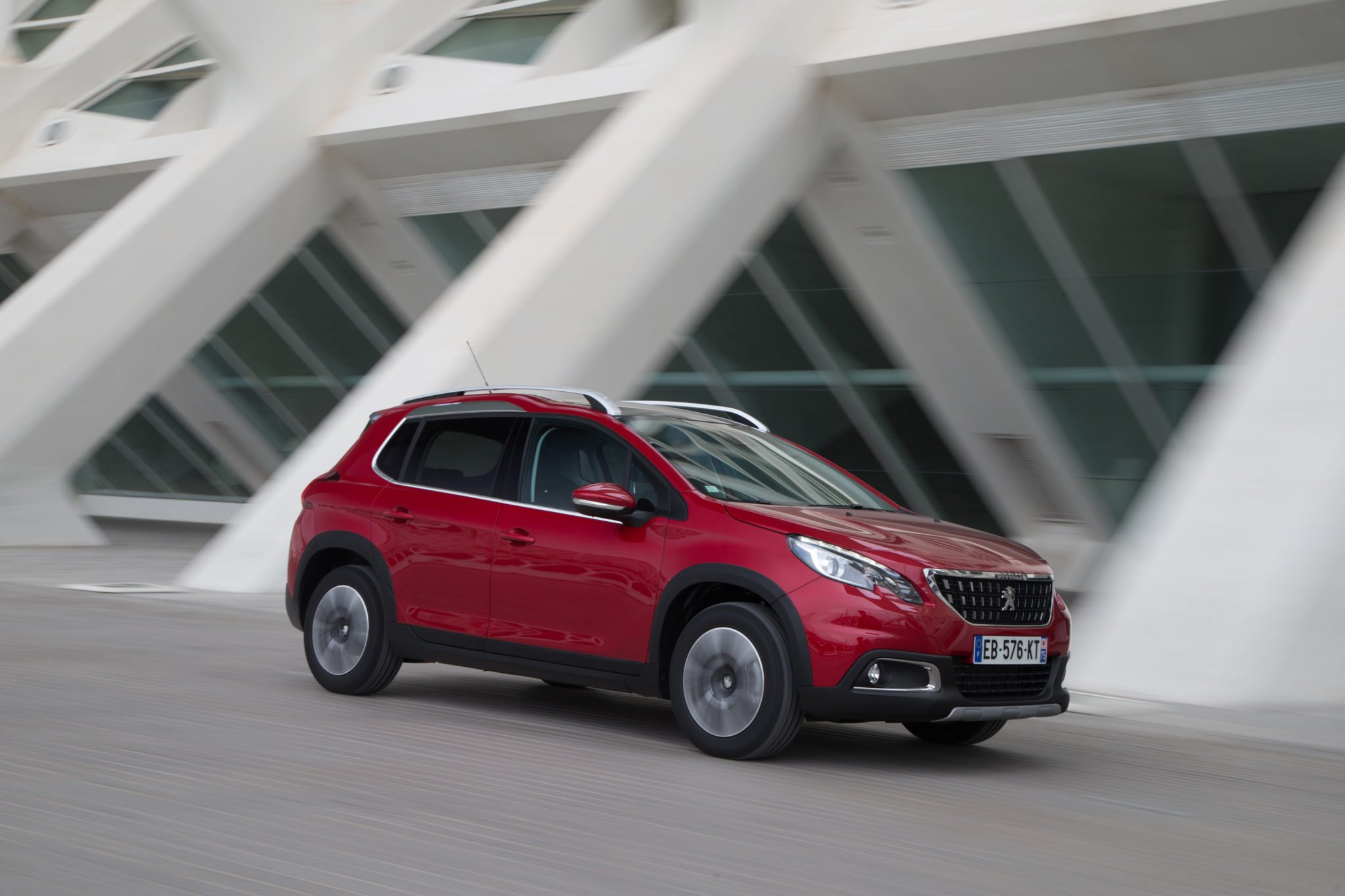
Revamped Peugeot 2008 Arrives In Ireland
The Peugeot 208 hatchback received a revamp last year and now it’s the turn of its crossover sibling, the Peugeot 2008.
The Peugeot 2008 compact SUV has been a hit for Peugeot in Ireland, with the combination of chunky SUV looks, practical interior and affordable pricing winning over buyers since its launch in 2013.
A new model has just gone on sale here with updated styling, new equipment, new colours and a new top of the range GT Line trim.
The most obvious exterior change is a new vertical grille with Peugeot lion badge at the centre and chrome grille surround. Two new colours have been added, Ultimate Red and Emerald Crystal.
Access, Active and Allure trim levels are joined by a sporty GT Line, which comes as standard with the Grip Control advanced traction system, 17” alloys, satellite navigation, dark-tinted side windows/rear screen, aluminium sports pedals, gloss black roof bars, a body coloured spoiler with gloss black trim, and black door mirror shells.
Elsewhere in the range, equipment levels remain high with entry level Access models including 6 airbags, air conditioning, Bluetooth, 2 x 12V sockets, LED daytime running lights, LED 3D claw rear lights, aviation style handbrake, front electric windows, cruise control + speed limiter, spare wheel, roof bars, tyre under-inflation detection and height adjustable driver’s seat.
Active trim includes automatic dual zone air conditioning, a 7” touch screen, automatic headlights, automatic windscreen wipers, electrochrome rear view mirror, front fog lights, 16” alloy wheels, front and rear electric windows, leather steering wheel, rear parking sensors and electrically folding door mirrors. The new model introduces rear privacy glass on Active models.
The Allure trim adds a cielo panoramic roof with ambient lighting, chrome door mirrors, one-touch electric front and rear windows, chrome side window weatherstrips, height adjustable passenger seat, cornering assist fog lights and Mistral Oxford Black premium half leatherette trim. The new 2008 model adds a rear view parking camera, front and rear scuff plates, wheel arch and body sill extensions, special 16” Aquila alloy wheels, MirrorLink and Apple Car Play as standard to Allure trim.
Active City Brake and Park Assist are also now available as options.
In terms of engines, the new 2008 is available with the 1.2 litre PureTech petrol in three different power outputs (82bhp, 110bhp, 130bhp) and the 1.6 litre BlueHDi diesel (75bhp, 100bhp, 120bhp). Manual and automatic transmissions are available including a new 6-speed automatic gearbox. CO2 emissions range from just 90g to 114g/km, and all power trains keep fuel consumption under 4.9 litres/100km.
Petrol models start at €19,400 (1.2-litre 82bhp in Access trim), while diesels start at €20,785 for the 1.6-litre diesel with 75bhp in Access trim. Active models are available from €20,445, Allure models from €22,400 and GT Line from €24,835.
The new Peugeot 2008 is available from Peugeot’s Irish dealer network now.
Caroline Kidd

Peugeot 508 RXH Review

Peugeot Ireland has recently added something very special to the 508 line-up: the 508 RXH is part of Peugeot’s strategy to move the brand upmarket. It sports a trendy, off-road look (think Volkswagen Passat Alltrack, Audi A4 Allroad and Volvo V60 Cross Country).
The 508 RXH was first launched some years ago as a diesel hybrid with four wheel drive, but this car never made it to Ireland. The car you see in the photos is far more conventional however. Peugeot has gone back to basics and stuck a straightforward 2.0-litre diesel into the body of the 508 RXH. They have also kept to a simple front wheel drive layout. Could there be anything more perfect for the Irish market?
Moving upmarket also means moving the pricing a little out of the mainstream. The 508 RXH has a list price of €41,595, but there is quite a lot going on with this car to justify that price.
In styling alone, the visual upgrades give the 508 RXH considerable more presence. It's got more kerb appeal when placed side by side to the standard 508 SW estate it’s derived from. The RXH has a raised ride height, which makes the car physically imposing. Plastic cladding around the wheel arches and sills and aluminium front and rear bumper scuff plates complete the off-road makeover. Characteristic 18” alloys and ‘claw-effect’ LED daytime running lights also announce the arrival of something a bit more special.
Inside the 2016 Peugeot 508 RXH
The build of the car also appears very good. The doors close with a resounding clunk and the cabin is put together well. The dash has an attractive design with lots of gloss black around the centre console and the plastics on view are of good quality. The spec is extremely good including heated and electrically adjustable front seats, keyless entry and start, electric parking brake and hill start assist, full leather trim, heads-up display, panoramic glass roof, climate control, cruise control, auto lights and wipers, rear view camera and parking sensors, four electric windows, blind spot monitoring…you will want for nothing. Three will fit comfortably in the back. The boot is 550 litres with a low sill, an easy clean plastic floor cover and various hooks and nets to control your cargo.

The 508 RXH comes as standard with a top of the range 2.0-litre BlueHDi diesel that produces a healthy 180bhp and there is just one gearbox option, a six speed automatic. The engine produces 400Nm of torque and there is plenty of power and pull so this car feels anything but underpowered. The automatic has a sport and winter mode, and paddles if you want to take over but I just let it do its thing for most of my time with the car. It makes smooth progress unless you ask it to dump all of its power on the road at the one time and then it hesitates a bit before the gear is engaged.
On the road in the 508 RXH
This car makes a great motorway companion and smoothes out the worst of the bumps and rough bits once you get out onto something more rural. The steering has a nice bit of heft to it and gives decent enough feedback so you can place the car quite easily on the smallest of roads. It’s not the most dynamically exciting car as it protests with lean of the car’s body weight when you push it hard into a corner. But nobody is selling this car under the pretence it’s a sports estate, and the 508 RXH has enough grip for it to always feel safe and secure on the road. Minimal road, engine and wind noise make this an easy car to get along with on a daily basis.
There is no four wheel drive option. But the advantage of the conventional layout is running costs are kept in the region of any other large diesel, front wheel drive car. Motor tax is just €200 for the year and the car will return up to 61mpg.
The Peugeot 508 RXH blends the practicality of a large estate car with some serious kerb appeal. The RXH makeover lifts the 508 into much more premium company. Of course, there is a price tag to match that. But thankfully the build and finish of the car, sheer mountain of equipment, and affable driving character help justify that.

Model tested: Peugeot 508 RXH 2.0-litre HDI FWD
Price: €41,595 (Base 508 SW from €29,790)
Engine: 2.0-litre turbo diesel
Power: 180bhp
0-100km/h: 8.9 seconds
Economy: 61.4mpg (4.6/100km)
CO2 emissions: 119g/km
Tax band: A4 (€200 per year)
Caroline Kidd

Peugeot 208 Review (2016)

Caroline drives the new Peugeot 208!
The glory days of Peugeot’s “2-oh” series of small hatchbacks were most certainly with the 205 of the 1980s, but nostalgia for the 205 is so powerful that Peugeot’s small cars are still where you look for stylish, affordable fun and great engines.
I should know. I learnt to drive in one: a 1.8-litre diesel 205 van with four gears, a heavy clutch and no power steering. I remember it feeling light, and of course what I thought was devilishly fast. It wasn’t so much the freedom of the open road, as the freedom of the open field, and the day I swung the 205 into fourth gear I felt like I had landed in motoring nirvana for the first time, aged 16, even though I was probably doing no more than 40mph.
The 208 continues the tradition of small Peugeot hatchbacks with the “2-oh” designation and the range has been revamped to keep it fresh and competitive in its class - tweaked styling, new personalisation options and the addition of the latest Peugeot engine technology.
The little Peugeot’s curvy bumpers, swept back, headlamps and aggressive nose might just be enough to win the stylish young things over even before they explore the new colour and personalisation options that have arrived with the latest 208. A new vibrant orange body colour ‘Orange Power’ is billboard-ready, and two textured paint options are available for the first time for a cool, matt look.
My test car (pictured) is finished in Ice Silver, which looks like the car is wrapped in matt grey. The Lime Green personalisation pack adds lovely green bits to the grille, green boomerangs to the front bumpers, and a green strip to black door mirrors. It’s rad.
The interior of the Peugeot 208
Inside the 208 is well-finished, with lots of glossy black surfaces and curves keeping it easy on the eye. I’m a fan of the small steering wheel that you look over rather than through to see the instrument dials, but check the driving position out for yourself to see if it works for you. Passenger space is good for a small car and the boot is about average at 285 litres but a full size spare wheel is included.
Access, Active and Allure trim have been joined by a sporty new GT Line but standard equipment is still generous including the aforementioned spare wheel, front electric windows, cruise control and speed limiter, driver’s seat height adjustment, remote central locking, Bluetooth, and steering wheel mounted audio controls. Active models add touchscreen, 15" alloys, fog lamps, air con, rear parking sensors, leather trimmed steering wheel and electric mirrors while the Allure upgrade includes LED daytime running lights, automatic lights and wipers, electrochrome rear view mirror, tinted rear and side windows, dual zone air con and 16" alloy wheels.

The 208 has a great line-up of engines, petrol and diesel, ranging from 68bhp to 110bhp. Petrol power comes from a choice of 1.0-litre (68bhp), 1.2-litre (82bhp) or the new, award winning 1.2-litre turbocharged Puretech engine with 110bhp. The new engine has emissions of just 103g CO2/km and pocket-friendly annual motor tax of €190.
The 208 has two new diesel options: the new 1.6 BlueHDi diesel with 75bhp or 100bhp. Both boast sub-100g CO2 emissions, with the higher powered version returning up to 83mpg.
My test car had the new 1.2-litre 110bhp petrol and it’s a turbocharged petrol wonder. It’s lively and will reach 100km/h from a standstill in 9.6 seconds, while returning up to 63mpg depending on how well-behaved you are behind the wheel. A sporting little growl accompanies hard acceleration and settles to a lovely background hum. There’s enough power for comfortable overtaking with hot hatch-like nippiness around town that will leave others scratching their heads at the traffic lights and checking for the GTi badges when they catch up.
It’s the most powerful engine in the standard 208 range but the little car is well able for the extra power: there’s reassuring grip in the corners and the steering is natural and intuitive so you can guide the car confidently around corners at speed. Comfort and refinement are generally very good by small car standards, but there is wind noise from around the windscreen at high speeds and much like rivals, driving over broken and uneven surfaces can be felt in the cabin.
Pricing starts at €14,845 for the 3-door range and €15,650 for the 5-door. Diesels start at €17,730. My 5-door test car with 1.2-litre Puretech turbo petrol in high spec Allure trim has a list price of €20,410 so it is at the more premium end of the small car market, but competitively priced against rivals of similar high spec.
The textured paint comes in at an extra €610 and the Lime Green personalisation pack is €270 but worth it I think for the wow factor and the textured paint is meant to be more hard-wearing, more resistant to micro-scratching and doesn’t suffer through frequent car washing.
So there are now more options for 208 buyers and the range is opened up to a buyer looking for something with a more individual look and more power, but who isn’t interested in a full-on GTi experience.
Yet beneath all the fancy colours and personalisation packs, there is still a very charming small car - the 208 range is still a very good place to look for stylish small car fun at any budget!

Looking for a compact crossover? Check out our review of the new Peugeot 2008!
Model Tested: Peugeot 208 5-door 1.2 Puretech 110bhp
Price: €20,410 (208 range starts at €14,845)
Engine: 1.2-litre, three cylinder turbo petrol
Power: 110bhp
0-100km/h: 9.6 seconds
Economy: 63mpg
CO2 Emissions: 103g/km
Motor Tax: €190 per year
Caroline Kidd

Peugeot 208 GTi Review

Caroline drives the 2013 Peugeot 208 GTi.
In 2012, Peugeot launched a new generation of the popular 208 supermini. It was chic, agile and backed up by a range of on-point petrol and diesel engines. It was a teaser for something even more exciting to come. Peugeot has a long history in making awesome hot hatchbacks. Remember the 205 GTi? This icon of the 1980s put Peugeot on the map as the maker of exciting compact performance cars.
Fast forward to 2013, and it's the return of Peugeot performance in the shape of the new 208 GTi. Under the bonnet, a 1.6-litre turbo petrol engine puts out 200 hp through the front wheels. Flared wheel arches and an aggressive body kit make the 208's presence known. While inside racy red trim puts you in the driver's seat.
What's so hot about the Peugeot 208 GTi?
Peugeot's compact hot hatchback challenger takes on the much lauded Ford Fiesta ST, SEAT Ibiza Cupra, Volkswagen Polo GTI and Opel Corsa OPC. These cars are an entry into high end performance engineering yet you will get some change of €30,000. Engineers put their heart and soul into creating these fun little hot hatchbacks that add glory to the brand while keeping thousands of fans around the world entertained for another generation.
So I was very excited to be handed the keys of the rip roaring 208 GTi by Peugeot Ireland. The 208 GTi has dream car written all over it. The already sculpted and athletic body of the 208 has been enhanced in GTi spec by extended sills and wheel arches, chrome door mirrors, dramatic 17” inch alloys with red brake calipers, roof spoiler, double exhaust, and the famous GTi badging. It sits lower than a standard 208 and has a wider track front and rear that's going to make it super hot on the road and through bends. The GTi gets a unique chequered flag effect grille and lower grille finisher in red.

Inside the 208 GTi!
When you slip into the 208 GTi you are greeted by a red and black theme with special touches like footwell lighting, aluminium pedals and door sills, and sporty looking instrument dials surrounded by red LEDs. Sports seats hold and cosset you for those days when you drive your 208 GTi with more enthusiasm. It's cosy and sporty in equal measure. A lovely place to discover this car's skill and ability on Irish roads.
The Peugeot 208 GTi is sold in sporty three door only. It's spacious enough up front but naturally more awkward to access the rear space as a result. Three door cars are rapidly going out of fashion but we can make an excuse for the 208 GTi. You get a decent boot for a small hatchback of 285 litres. A full size spare wheel is also included.
When you turn the key in the ignition, Peugeot's wonderful 1.6-litre engine bursts into life with a welcome bass rumble. This engine is a joy to behold. It revs beautifully. Power delivery is urgent. But fuel consumption is decent enough and it's easy to drive and manage in any situation. There's speed, lots of it and it's fun to exploit. We also loved this engine when we drive it in the Peugeot 308 GTi. That's the larger, more powerful big brother to the 208 GTi. What a family.
Driving the Peugeot 208 GTi - any good?
The new 208 GTi is more rigid and sporty than the standard 208 supermini. Suspension and wheels are specific to this latest Peugeot GTi, with modifications to springs, calibration of the shock absorbers, anti-roll bar, enhanced front subframe and rear crossmember rigidity. Agile and reactive, the 208 GTi balances from one turn to the next with complete precision. Controlled by the steering, the settings of which have been revised to increase firmness, the front suspension returns the information perfectly and responsively. The rear suspension is also well tuned for safe and involved driving. The 1.6-litre THP 200bhp petrol engine expresses itself through a reworked exhaust system.
The 208 GTi will sprint to 100 km/h in 6.8 seconds. With 275 Nm of torque at your disposal, it pulls hard through the gears, accompanied by a fruity grunt from the exhaust. We do wish it was a bit noisier. It lacks a little bit of rawness, a point where rival Ford Fiesta ST excels I suppose. Still it's fun extracting the power from the engine through the slick shifting, manual gearbox. The handling is precise and controlled with loads of front end grip. We might add that Peugeot's innovative small steering wheel (as part of the i Cockpit) feels great in your hands. You put your foot down and it goes in a straight line - no torque steer.

Did you like it?
We liked the 208 GTi also because it's comfortable to drive daily across a variety of Irish roads. Despite the sporty modifications there's no lurching over bumps in the road. It's very well-behaved. Another thing to like? The 208 GTi follows the trend for more efficient hot hatches with an official economy value of just under 50mpg. But remember, a heavy right foot will seriously diminish fuel economy!
At just over €28,000, the 208 GTi is a little bit of an indulgence. You do get lots of kit including a 7" touchscreen with Bluetooth connectivity, dual zone air conditioning, cruise control and speed limiter, fog lamps, rear privacy glass, electric windows and electric folding mirrors, auto lights/wipers, remote central locking and LED daytime running lights.
The 208 GTi is utterly transformed from the 208 hatchback it's based on. It's a blast with the extra grip, a stiffer body, while still being a car you can live with quite easily from day to day. You'll never get tired of the strong torque from low revs. I just wish it were noisier! This car has a great image and pedigree going back to the days of the 205 GTi, and with sporty exterior updates, it has real kerb appeal too. Lots to like here.
Read what an owner has to say about the new Peugeot 208 GTi.
Model tested: Peugeot 208 GTi
Price: €28,175
Engine: 1.6 litre, turbocharged four cylinder petrol
Power: 200bhp
0-100km/h: 6.8 seconds
Economy: 47.9mpg (5.9l/100km)
CO2 emissions: 139g/km
Tax band: B2 (€280 per year)
Caroline Kidd